Better vs Different
Don't play the wrong game.

Most founders aren’t failing.
They’re just playing the wrong game.
They’re trying to be better when the market only rewards the ones who choose to be different.
Better is the losing game.
The Founder Trap: The “Better” Illusion
Most founders think the path to growth is:
more features
more service
more effort
more output
That’s not brand building.
That’s labor.
When you compete on “better,” you enter a comparison war you can’t win because someone in your category will always:
• work harder
• charge less
• add more
• shout louder
• respond faster
Better is rational.
Different is psychological.
People don’t pay premiums for rational decisions.
They pay for alignment, taste, identity, and clarity.
If your business feels like a fight, it’s because “better” made you one of many.
The Reality Check: The 20-to-2 Principle
Here’s the truth founders try to avoid:
If customers can compare you, you’re priced to lose.
Commodities compete with 20 alternatives.
Brands compete with 2.
Category leaders compete with none.
Why This Happens: Founders Copy Categories
Founders don’t enter categories. They inherit them.
Without noticing, they copy the exact things they should be rejecting:
• the same visual codes
• the same message structure
• the same tone
• the same promises
• the same pricing logic
• the same content
• the same positioning language
They accidentally become replicas in a market built on sameness.
You can’t win a race you shouldn’t be running.
What “Different” Actually Means (The Business Version)
Most founders think “different” means being creative.
That’s not what creates pricing power.
Different means you occupy a gap in the market that no one else is addressing.
A structural hole.
A position competitors can’t copy without breaking their entire model.
Not cute.
Not quirky.
Not louder.
Practical definition:
Being different = building your offer, message, product, and worldview around a market gap competitors either can’t see, can’t serve, or can’t commit to.
Here’s what that looks like in real business terms:
Different is a strategic category choice.
You redefine the space so you’re no longer compared to the mainstream.
Different is an unmet need or unserved buyer psychology.
You address what the market ignores because it’s inconvenient or too specific.
Different is a business model decision.
You remove, add, or reorganize elements in a way the category won’t copy.
Different is a taste and standard that forces separation.
Your visual and verbal identity communicates a different level of intent.
Different is a position competitors can’t enter without losing themselves.
If they imitate you, they break their economics or alienate their base.
This is market-gap positioning, not personality.
Better says:
“We improved what already exists.”
Different says:
“We serve a need this market wasn’t built for.”
That’s the move that removes competition and creates pricing power.
Real-World Examples of “Different” Done Right
Here are four brands that chose separation over comparison.
1. Graza Rebuilt the Olive Oil Category
Legacy olive oil brands look identical: antique, European, nostalgic.
Graza rejected all of it and created a new category:
• squeeze bottles
• bold color
• playful naming (Sizzle, Drizzle)
• functional usage
• cooking-forward positioning
They didn’t try to be “better olive oil.”
They became everyday olive oil designed for modern kitchens.
2. Liquid Death Turned Water Into a Lifestyle
Every water brand competes on purity and wellness.
Liquid Death ignored the entire category:
metal-inspired branding
• tallboy cans
• rebellious tone
• entertainment-first strategy
They didn’t compete in hydration.
They created the rebel water category.
3. Very Demure Luxury Without Synthetic Excess
Skincare is predictable. Luxury uses synthetics. Clean beauty sacrifices performance.
Very Demure created a third category:
Natural formulas with clinical-level efficacy, delivered with minimalist luxury and strict biocompatibility.
And it isn’t theory. It’s built into the products.
Use case: The Protein Face Cleanser.
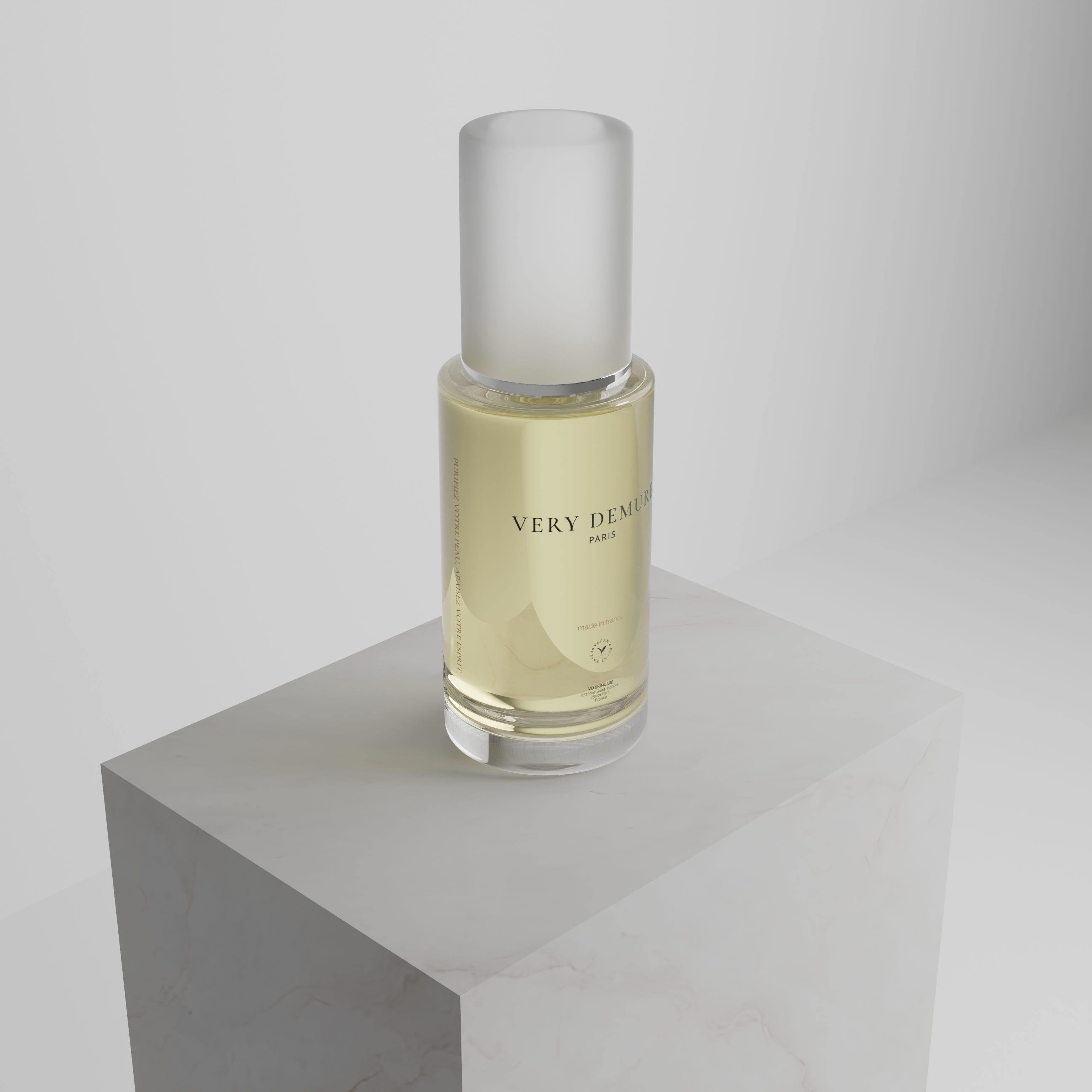
Standard cleansers:
150 ml. Plastic tube. Commodity feel.
Very Demure:
50 ml. Heavy glass bottle that looks like a fragrance.
Small. Concentrated. Elevated.
Aesthetic restraint, not excess.
Competitors can’t copy it without breaking their margins or their brand logic.
This single product is a strategic signal:
• luxury without synthetics
• organic without weakness
• minimalism without compromise
• skincare treated with the standards of perfumery
Very Demure isn’t competing with luxury or clean beauty.
They occupy their own market gap.
Nature refined by taste, elevated by science.
4. Gymshark Designed for a Tribe, Not a Market
Mainstream activewear tries to please everyone.
Gymshark focused on one tribe:
serious lifters.
Their fits, creators, tone, and culture were built for athletes who live in the gym.
They didn’t compete with Nike.
They built the performance-aesthetics category for lifters.
The Founder Identity Shift
When you stop trying to be better, you stop fighting the market.
When you start being different, you:
• raise prices without resistance
• reduce CAC (the cost of acquiring 1 customer)
• raise LTV (the amount a customer spends during your relationship)
• increase retention
• attract aligned customers
• reject misaligned prospects
• create instant trust
• build referral loops
• form a cult, not a community
This is the moment your business stops being a supplier and becomes a brand.
A Simple Diagnostic: Are You Better or Are You Different?
Answer honestly:
Can someone describe what makes you unique in one sentence
Can your customer instantly distinguish you inside your category
Would removing you force people to change their behavior or identity
If the answer is no, you’re still in the “better” game.
Which means you’re playing against 20 alternatives.
The Shift: How Founders Create Category Separation
Three steps.
1. Reject the existing category.
Stop inheriting the rules.
You cannot build a premium brand on borrowed logic.
2. Declare a worldview.
Taste, values, philosophy.
Premium brands are built on belief systems, not features.
3. Build a positioning statement that kills comparison.
Your brand becomes the only one in the world doing what you do, the way you do it.
That’s when competition disappears.
A Personal Moment: My Breakout Realization
I was showcasing products at an event when someone picked up the Protein Face Cleanser and said, “I didn’t know you offered fragrances too. Are they natural and organic?”
I told them, “This isn’t a perfume. It’s a face cleanser.”
That was the moment I realized what I had built.
The product was so far outside the category norm that people didn’t know how to classify it.
Exactly the goal.
Later, another customer said, “It’s not very handy that it’s in glass. I can only use it in front of my mirror, not in the shower.”
Good.
That was the point.
It’s not meant to be thrown in a shower caddy like a generic 150 ml plastic cleanser.
It’s designed to sit on a shelf like an intentional, elevated object.
A signal of discipline, taste, and minimalism.
They reordered the next day.
That moment confirmed the strategy:
When people stop comparing your product, you’ve successfully left the category.
Close
Most founders are not underperforming.
They’re just stuck competing in categories they should be reinventing.
Better is crowded.
Different is empty.
One game drains you.
The other compounds.